This is one of the first questions people ask when they get into mushroom growing, and the answer. annoyingly. is "it depends." It depends on your space, your budget, what species you want to grow, and how much patience you've got. I've been doing both for a while now and they're honestly quite different hobbies that happen to share the same organism.
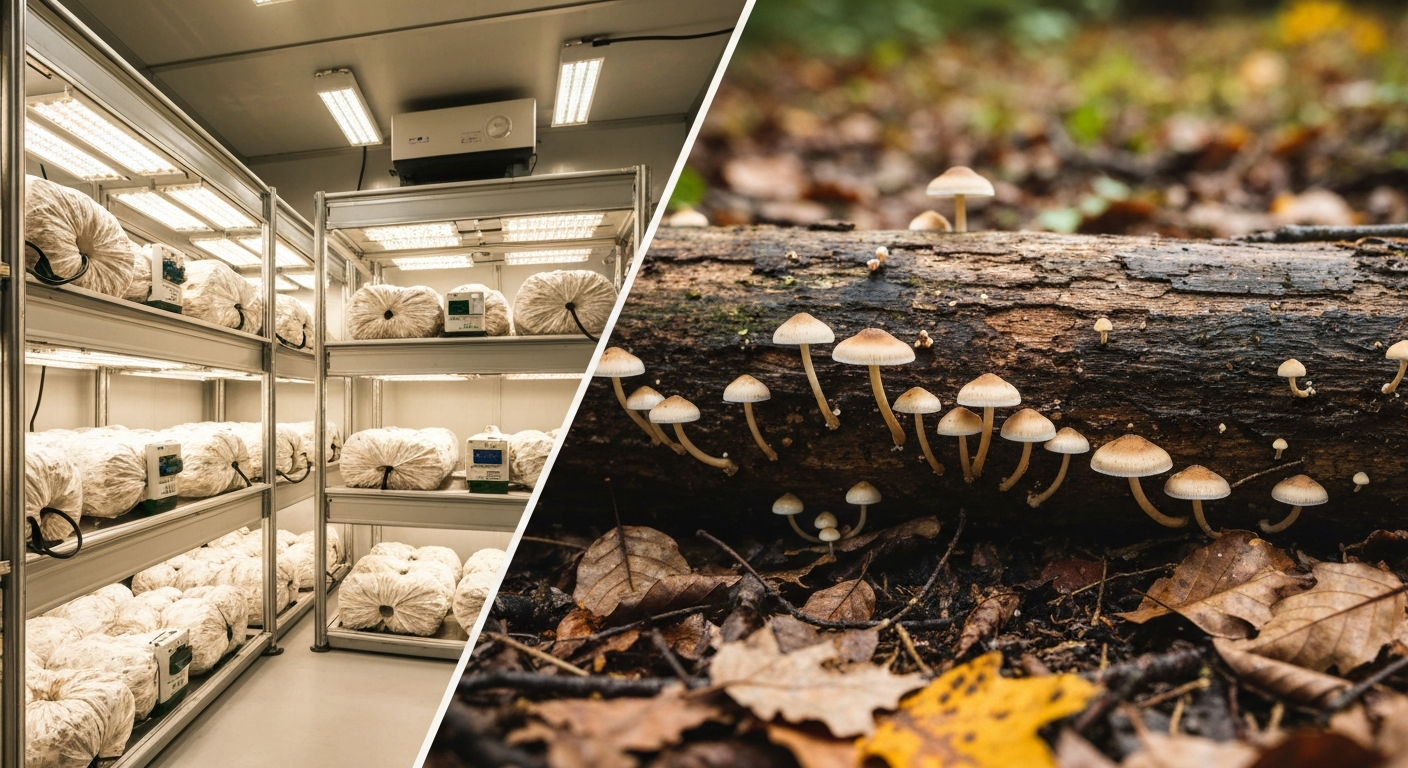
Indoor growing is controlled, consistent, and year-round. Outdoor growing is seasonal, low-maintenance, and feels more like actual gardening. I love both for different reasons, but they suit different people and different situations. Let me break it down properly so you can figure out what makes sense for you.
The Honest Comparison
Before we get into the specifics, here's the top-level view. Indoor growing gives you control. you set the temperature, humidity, and fresh air exchange. The trade-off is that you need equipment, sterile technique, and you're fighting contamination the whole time. Outdoor growing gives you simplicity. nature handles the environmental conditions. The trade-off is that you're at the mercy of the weather, you can only grow certain species, and your harvest window is limited to specific seasons.
Neither approach is objectively better. I started indoors with a monotub because I live in a flat with no garden, and it worked brilliantly for me. When I moved to a place with a bit of outdoor space, I started doing log cultivation as well. Now I do both, and they complement each other nicely. indoor grows keep me supplied through winter while my logs and beds produce in spring and autumn.
Indoor Monotub Growing
The monotub is the workhorse of home indoor cultivation. I've covered the full setup in the monotub guide, so I won't repeat everything here, but here are the pros and cons from a comparison standpoint:
Pros:
- Year-round growing. Temperature in your spare room doesn't drop to 2°C in January. You can fruit mushrooms every month of the year.
- Fast turnaround. From spawning to first harvest in 3-5 weeks for most species. You can run multiple tubs simultaneously and stagger them for continuous supply.
- Wide species range. Oysters, lion's mane, king oyster, shiitake, maitake. basically anything commercially available as grain spawn.
- Small space needed. A single monotub sits on a shelf. I've run four tubs simultaneously in a cupboard under the stairs.
- Higher yields per batch. With proper substrate at field capacity and a good spawn ratio, a 60-litre monotub can produce 500-800g over three flushes.
Cons:
- Contamination risk. This is the big one. Indoor growing requires sterile technique, proper pasteurisation, and constant vigilance. Trichoderma doesn't care about your feelings.
- Equipment needed. Pressure cooker, still air box, spray bottles, tubs, grain, substrate materials. The initial outlay adds up.
- Active management. You need to check humidity, monitor for contaminants, harvest at the right time. It's not set-and-forget.
- Learning curve. Sterile technique, spawn preparation, substrate recipes, fruiting conditions. there's quite a lot to learn upfront. See the full grow cycle guide for the complete process.
Indoor Martha Tent Setup
A quick mention of the Martha tent, which is the next step up from monotubs for serious indoor growers. It's a small greenhouse-style shelving unit (the name comes from a specific IKEA greenhouse model that growers originally used, though any small greenhouse works) fitted with a humidifier, a timer, and sometimes a small fan.
Martha tents are brilliant if you want to fruit multiple species simultaneously or if you're growing species that need very high humidity (like lion's mane, which wants 90%+ humidity during fruiting). I upgraded to a Martha tent about six months into the hobby and it was a game-changer for lion's mane in particular. my monotub lion's mane always came out a bit scraggly, but in the Martha tent with consistent 90-95% humidity they grew into proper pom-pom shapes.
The downside is cost (a basic setup runs about forty to sixty quid with the humidifier and timer) and the fact that if your humidity gets out of control, you can create mold problems in the room around the tent. I've had some interesting conversations with my partner about the damp patch on the ceiling above the Martha tent. Good ventilation in the room is essential.
Outdoor Log Cultivation
Log cultivation is the oldest and simplest form of mushroom growing. You drill holes in a freshly-cut hardwood log, hammer in spawn plugs, seal with wax, and wait. That's genuinely it. The mycelium colonises the log over several months, and then mushrooms fruit when conditions are right. usually after a good rain in spring or autumn.
Pros:
- Almost no ongoing work. Once the logs are plugged, you basically leave them alone. Maybe water them during dry spells. That's it.
- No sterile technique needed. The spawn plugs are already colonised, and the log's bark provides natural contamination protection. I've never lost a log to contamination.
- Long productive life. A well-colonised log can fruit for 3-6 years depending on the size and wood type. That's years of mushrooms from a single afternoon's work.
- Free substrate. If you've got access to freshly-cut hardwood (from tree surgery, council works, your own garden), the logs cost nothing.
- Beautiful to look at. Honestly, a log stack in a shady corner of the garden producing shiitake is one of the most satisfying things in this hobby.
Cons:
- Slow. Colonisation takes 6-18 months depending on the log size and species. You need patience.
- Seasonal production. In the UK, most log species fruit in spring and autumn when temperatures are 10-20°C and there's decent rainfall. Nothing in mid-winter or high summer.
- Limited species. Shiitake, oyster, lion's mane, and chicken of the woods work well on logs. That's about it for the common cultivated species.
- Need outdoor space. Logs need a shady, sheltered spot with reasonable moisture. Not an option if you're in a flat.
- Lower yield per effort. A single log produces maybe 100-300g per fruiting, and it fruits two or three times a year. You'd need quite a few logs to match indoor monotub production.
For logs, use freshly-cut hardwood. oak, beech, birch, or alder are all excellent. The log should have been cut no more than 4-6 weeks ago and the bark must be intact. Avoid anything that's been sitting around for months, as it'll already be colonised by wild fungi. Drill holes about 15cm apart in a diamond pattern, tap in the spawn plugs, and seal each hole with melted cheese wax or beeswax. Stack the logs in a shady spot (under trees is ideal) and keep them off the ground on a pallet or bricks.
Outdoor Bed Growing
Mushroom beds are basically raised beds or ground-level patches where you layer substrate (usually straw or wood chips) with spawn. They're particularly popular for wine caps (Stropharia rugoso-annulata) and oyster mushrooms. I've had cracking results with wine cap beds. they're one of the easiest outdoor grows going.
To set up a basic mushroom bed: choose a shady spot, lay down a layer of dampened cardboard (to suppress weeds and give the mycelium a running start), then alternate layers of dampened straw or hardwood chips with crumbled grain spawn. Three or four layers, ending with a straw or chip layer on top. Water it in well, and then basically leave it alone except for occasional watering during dry periods.
Wine cap beds in particular are brilliant for the UK climate. They colonise through the wood chip layer over summer and then fruit prolifically in autumn when temperatures drop and rain arrives. I set up a 1m x 2m bed last April with about a kilo of grain spawn and harvested over 2kg of wine caps from September through November. The bed is still going. I just top it up with fresh wood chips each spring.
Oyster mushroom beds on straw work similarly but tend to produce more quickly. sometimes within a couple of months if conditions are warm and moist enough. They're less long-lived than wine cap beds though, usually only producing for one season before the straw is fully consumed.
Cost Comparison
Here's a rough breakdown for getting started with each approach. All prices are what I've actually paid in the UK as of early 2026:
- Indoor monotub setup: Storage tub (£8), pressure cooker (£30-40 second-hand), still air box materials (£10), grain (£5 for 2kg rye), coco coir brick (£3), vermiculite (£5), gypsum (£3), spray bottle (£1), polyfill (£2). Total: roughly £65-80.
- Indoor Martha tent: Small greenhouse shelving (£20-30), ultrasonic humidifier (£15-20), timer (£8), plus all the monotub consumables. Total: roughly £110-130.
- Outdoor log cultivation: Spawn plugs (£10-15 for 100), drill bit (£5), cheese wax (£5), logs (free if you can source them). Total: roughly £20-25.
- Outdoor bed growing: Grain spawn (£10-15 for a kilo), straw or wood chips (£5-10 or free), cardboard (free). Total: roughly £15-25.
Outdoor methods are clearly cheaper to start with. But the ongoing cost per harvest tends to favour indoor growing over time, because you get more flushes more frequently from a smaller amount of spawn.
Best Species for Each Method
- Indoor monotub/Martha: Oyster mushrooms (all varieties), king oyster, lion's mane, shiitake, maitake, pioppino, chestnut mushrooms. Basically the full range of gourmet species.
- Outdoor logs: Shiitake (the classic), oyster mushrooms, lion's mane, chicken of the woods, nameko.
- Outdoor beds: Wine caps (king stropharia), oyster mushrooms, garden giant. Wine caps are the standout performer here. they're almost foolproof in UK conditions.
If there's a specific species you're after, that might make the decision for you. Want lion's mane? You'll get much better results indoors. Want wine caps? Outdoor beds are really the only option. Want oysters? They'll grow anywhere, anytime, on practically anything. they're the grower's equivalent of a Labrador.
Seasonal Considerations
In the UK, outdoor mushroom production follows a pretty predictable pattern:
- Spring (March-May): Log shiitake start fruiting as temperatures climb above 10°C. This is also the best time to plug new logs and set up new beds.
- Summer (June-August): Outdoor production slows unless we get a wet spell. Most logs and beds are just colonising. Indoor growing carries on as normal.
- Autumn (September-November): Peak outdoor season. Wine cap beds go mental. Log shiitake produce again. Oyster beds fruit. The best time of year for outdoor growers.
- Winter (December-February): Outdoor production stops for most species. Indoor growing fills the gap. This is when having a monotub or Martha tent really pays off. fresh homegrown mushrooms in January while your logs are dormant under a layer of frost.
This seasonal rhythm is actually why I recommend doing both if you have the space. Indoor growing covers winter and summer, outdoor covers spring and autumn, and you end up with mushrooms year-round without relying too heavily on either method.
My Recommendation for Beginners
If you're genuinely brand new to mushroom growing and you want one recommendation: start with an indoor monotub grow using oyster mushrooms on CVG substrate. Here's why:
- Oysters are incredibly forgiving. They colonise fast, resist contamination better than most species, and produce heavily even if your conditions aren't perfect.
- A monotub teaches you the fundamentals. sterile technique, substrate preparation, fruiting conditions. that apply to every other method.
- You'll have mushrooms in 3-4 weeks rather than waiting 6-18 months for a log to colonise. Early success keeps you motivated.
- You can do it in any living situation. flat, house, student accommodation. All you need is a corner of a room.
Once you've done a successful monotub grow, you'll have a much better feel for what mushroom cultivation involves and whether you want to expand into outdoor methods, try different species, or scale up with a Martha tent. If you've got a garden and you're the patient type, plug some shiitake logs at the same time as your first monotub. by the time the logs are ready to fruit, you'll have several indoor grows under your belt and a much deeper understanding of the whole process.
Whatever you choose, the substrate recipes guide covers the substrate side, and the monotub setup guide walks you through your first indoor grow step by step. Good luck. and remember that every experienced grower started exactly where you are now, staring at a tub and wondering if they'd done it right.
Frequently Asked Questions
Can I grow oyster mushrooms outdoors in the UK?
Absolutely, and they're one of the best species for it. I've grown blue, grey, and pink oysters outdoors on straw beds and logs. The main thing to watch is timing. start your outdoor beds in late spring (April-May) once night temperatures are consistently above 8-10°C. Grey and blue oysters are the hardiest and will fruit right through autumn. Pink oysters need warmer conditions so they're better as a summer crop. For logs, drill and plug in spring, and you might get your first flush that same autumn or the following spring depending on the log size.
Is indoor growing more expensive than outdoor?
The startup cost is higher, definitely. A basic indoor setup. monotub, pressure cooker, still air box, grain, substrate, spray bottle. runs about sixty to eighty quid all in. An outdoor log setup needs spawn plugs (about a tenner), a drill, some wax, and a log you've scrounged for free. So outdoor is cheaper to get started. But over time, indoor growing gives you more flushes per year with higher yields per batch, so the cost per gram of mushrooms is often lower indoors if you keep at it. I spend more up front on indoor gear but I'm harvesting year-round rather than seasonally.
What species can I grow both indoors and outdoors?
Oyster mushrooms are the most versatile. they thrive in monotubs indoors and on straw beds or logs outdoors. Shiitake works well both ways too: supplemented sawdust blocks indoors, hardwood logs outdoors. Wine caps (Stropharia rugoso-annulata) are primarily outdoor growers but can be done in large indoor containers if you've got the space. Lion's mane is mainly an indoor species but some people have success with outdoor logs in sheltered spots. King oysters are really indoor-only unless you're somewhere with very stable mild temperatures.